TST P-TECH students experienced the intersection of science and policy firsthand when New York State Assemblymember Dr. Anna Kelles visited their classroom on December 15. Assemblymember Kelles, who represents District 125, is the lead sponsor of the Harmful Algal Bloom Monitoring and Prevention Act currently moving through the New York State legislature.
The visit connected directly to the students’ Participation in Government and Technology & the Environment course, where they have been studying harmful algal blooms, or HABs, from scientific, environmental, and civic perspectives.
Harmful algal blooms are an ongoing environmental challenge in Tompkins County and across the Finger Lakes region. Local lakes, including Cayuga Lake, experience recurring blooms during the warmer months, and recent years have shown increases in both their frequency and intensity. These blooms, caused by cyanobacteria, can affect drinking water sources, limit recreational use, and pose health risks to humans and animals. Ongoing monitoring efforts by New York State agencies, local water providers, and volunteer networks have helped track bloom activity, yet changing climate conditions and nutrient pollution continue to create conditions where HABs thrive. This regional context has made the study of HABs especially relevant for P-TECH students as they explore the science behind these events and their impacts on local communities.
Earlier in the year, students visited Bolton Point, the municipal water system that serves five local communities in Tompkins County. The visit helped students understand how HABs affect drinking water and what it takes to provide safe, high quality water to residents in our community. Students learned about the raw water intake system that draws from Cayuga Lake, the multi-step treatment process that removes contaminants, and the transmission system that carries treated water throughout the region. Bolton Point staff explained the challenges water providers face when blooms occur near intake pipes, including increased monitoring, laboratory testing, and adjustments to treatment processes. Students were able to see firsthand how complex the water system is and how much coordination and expertise are required to protect the public water supply, especially as environmental conditions continue to change.
Before Dr. Kelles’ visit, students spent time building knowledge about both the natural and human related causes of harmful algal blooms and their impacts on ecosystems and human health. During a visit to the Community Science Institute (CSI), students explored how HABs pose risks through different exposure pathways, including skin contact, inhalation, and water consumption. Students practiced identifying HABs by examining visual patterns and learning how to distinguish them from harmless green algae.
In CSI’s certified laboratory, students learned how water samples collected from Cayuga Lake are analyzed using two different tests. One test helps determine how large or dense a bloom is, while the other measures the presence of toxins. Students learned that blooms that appear severe do not always contain high toxin levels and that both types of testing are needed to fully understand bloom severity and potential risk. Staff also introduced students to CSI’s HABs Harrier volunteer program and community reporting system, which allow citizens to submit observations that contribute to ongoing monitoring and help protect public health.
Assemblymember Kelles built on this foundation by discussing the HABs legislation she is sponsoring, the intent behind it, and the broader statewide effort to protect water quality. She shared insights into the legislative process and described the collaboration among scientists, agencies, communities, and lawmakers working together to address HABs in New York. Students asked Dr. Kelles questions about what led her to become a representative and what motivates her to fight for issues important to her constituency and beyond. Additional questions helped students better understand how the legislation, once enacted, could support communities in using evidence based strategies to mitigate harmful algal blooms.
“Conversations like this remind me how powerful it is to connect students directly with the legislative process and to support the next generation of environmental leaders,” said Assemblymember Kelles.
The visit allowed students connect their classroom learning with real environmental policy and demonstrated how scientific inquiry informs decisions that affect communities. The experience reflects the mission of P-TECH to provide students with project based learning that has meaningful, real world impact in our local community.
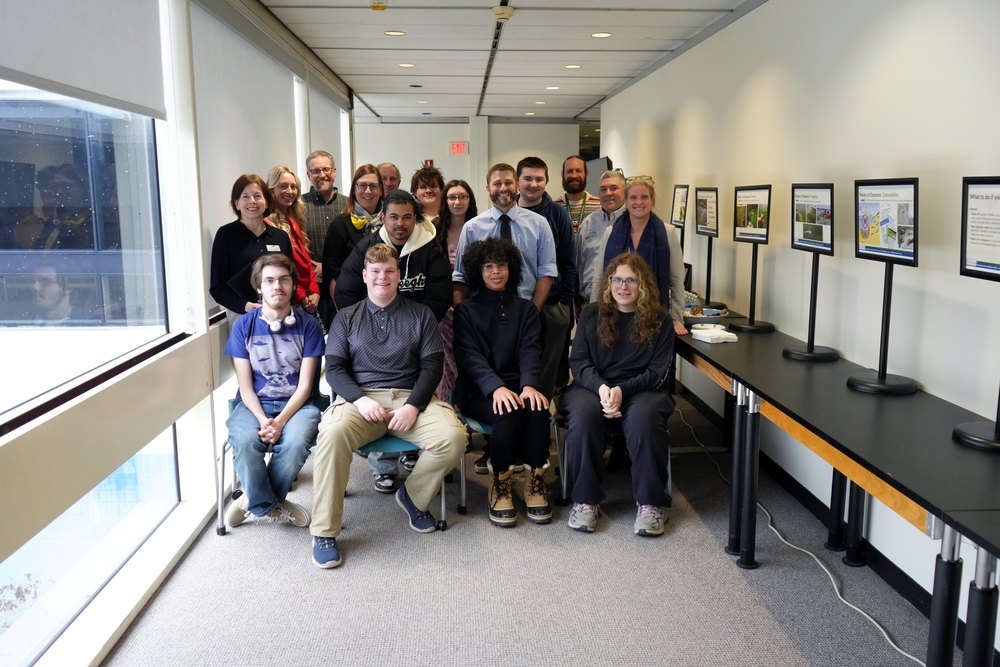
Assemblymember Dr. Anna Kelles Visits P-TECH to Connect Classroom Learning to Environmental Policy
December 17, 2025