
By Emily Wemmer, Director of Regional School Success
As schools around our region begin to dive into the NY Inspires initiative this year, much of the conversation has centered around promoting instruction across the curriculum that is rigorous, engaging, and culturally responsive. Innovative practices like project-based learning can push all students to think critically and apply their learning to the real world around them. However, alongside these changes to instruction, schools must also make changes to the ways they assess students. Equitable grading practices help to ensure that students’ grades accurately reflect the depth of their learning.
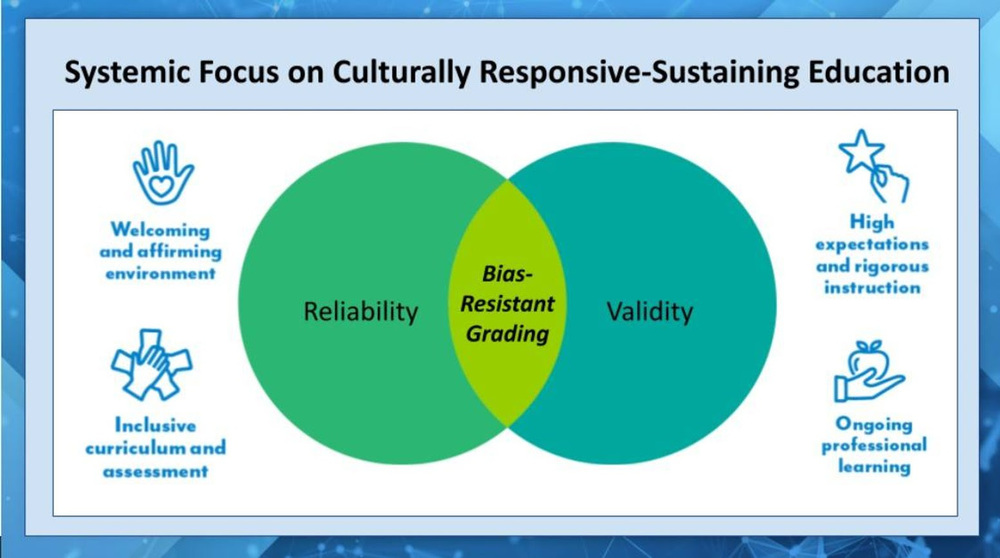
All grading systems must ensure reliability and validity in order to be effective. In other words, grades must be assigned consistently from student to student, and must also clearly communicate each student’s current level of academic achievement. Equitable grading practices go a step further by recognizing the impact of implicit bias on grades. Educational research has found that many subconscious factors can influence the way that students are graded, from teachers’ expectations for their students to the neatness of students’ handwriting to the mood the teachers are in when grading papers! Schools that embrace equitable grading practices set up systems that help educators make informed professional decisions about learning while minimizing the impact that these implicit biases can have on a students’ educational experience.
One step that schools in our region have taken to make their grading practices more equitable is to move away from the 0-100 grading scale and adopt an integer scale such as 0-4. While the 0-100 grading scale feels familiar, over a century of educational research shows that it is not the best option for students. For example, not only is the 0-100 scale highly unreliable, it also tends to promote competition over grades between students, leading them to focus more on earning or losing points than on the quality of their learning. Students are less willing to challenge themselves with higher-level courses or hands-on learning opportunities when they are overly concerned about maintaining high grades. A more holistic approach to grading on an integer scale gives students the freedom to explore the kinds of hands-on, deeper learning opportunities that NY Inspires promotes.