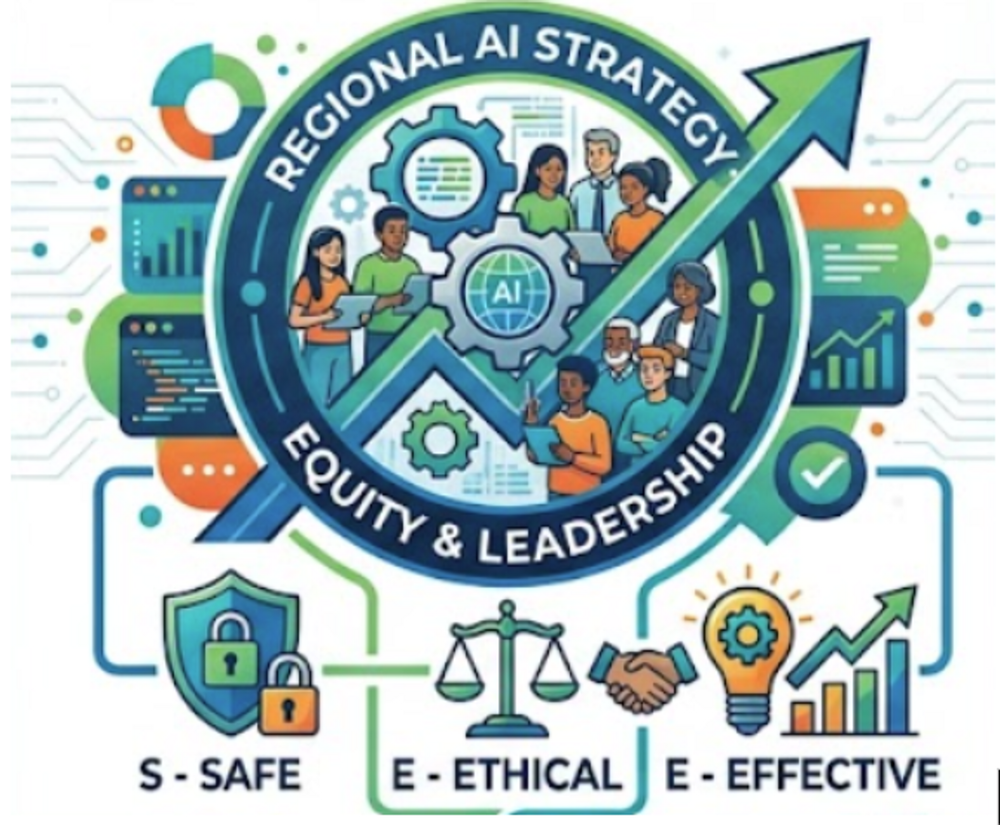
By Dan Parker, Director of Technology In an era where artificial intelligence often moves faster than organizational guardrails can be built, we at TST BOCES are charting a distinct path forward. We are proud to share an update on our GenAI Implementation Roadmap—a human-centered, equity-driven strategy designed to optimize our operational efficiency and instructional quality while safeguarding safety and ethical innovation. At the core of this initiative is our firm commitment to Equity and Leadership, a foundational priority area within our TST BOCES Blueprint for Excellence. Our overarching goal is to expand educational opportunities for everyone in our community by actively identifying and dismantling logistical, financial, and informational barriers to technology access. Grounding Our Strategy in the SEE Framework We are not simply deploying tools for the sake of technology. Instead, we are anchoring our entire implementation within AI for Education’s SEE AI Literacy Framework. By utilizing SEE as our common framework, we ensure that all of our upcoming educational policies, guidelines, and student touchpoints are viewed through three interconnected lenses: As we move forward, we are also committed to creating developmentally appropriate guidelines that promote regional equity. In creating this guidance and deciding how these tools are integrated, we will heavily emphasize student voice, ensuring their perspectives, unique needs, and experiences are at the center of the development process. This is a crucial step to truly bridge the digital divide. Moving from Local Capacity to Regional Scale To build a sustainable foundation, we are executing a deliberate, phased roll-out. Currently, Phase 0 (Vision, Governance & Readiness) and Phase 1 (Internal Capacity, Literacy & Proof of Concept) are fully underway at our local organizational level. |
Locally, we have established our cross-functional internal AI Governance Team, audited our operational and technical readiness, and are training our staff to achieve a unified baseline literacy. We are also deploying low-risk proof-of-concept projects—ranging from administrative workflow automation to simplifying complex documentation—to build internal confidence and secure early wins. Building this strong local capacity today is the vital springboard for our future regional expansion. In our upcoming phases (Phases 2 through 5), we will scale these tested frameworks outward to our component school districts. Our future milestones include launching a Regional AI Steering Committee, rolling out localized student pilots, and deeply embedding AI support across shared strategic areas like Inclusive Special Education and career pathway mapping. By establishing robust local governance now, we are modeling the exact responsible, reflective leadership needed to empower our interconnected regional community for tomorrow. |